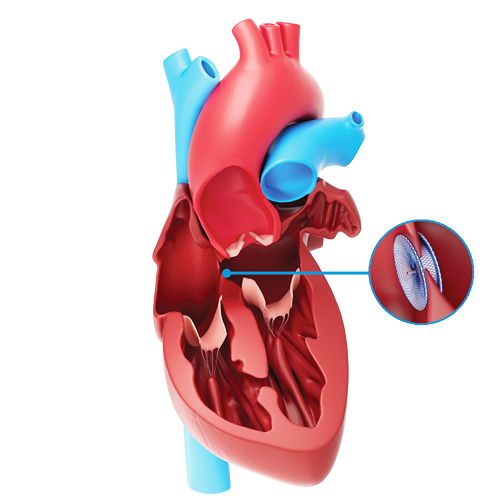
What is an Atrial Septal Defect (ASD) Closure?
ASD closure is a procedure performed to seal a hole in the wall that separates the upper chambers of the heart, helping to restore normal blood flow. It is most commonly done using a minimally invasive technique involving a small, flexible tube called a catheter.
During the procedure, you will be placed under anaesthesia to ensure you remain comfortable and feel no pain. Your doctor will make a small incision, usually in the groin area, to insert the catheter into a blood vessel. The catheter is then carefully guided to the heart using imaging technology.
Once the catheter reaches the defect, a small closure device is positioned to seal the hole. The device stays in place permanently and becomes part of the heart tissue as it heals.
The procedure usually takes about one to two hours to complete. Once the hole is closed, the catheter is removed and the small incision is sealed.