Transcatheter Aortic Valve Implantation (TAVI)

What is an Transcatheter Aortic Valve Implantation (TAVI)?

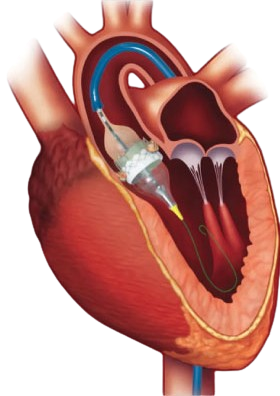
A Transcatheter Aortic Valve Implantation (TAVI) is a minimally invasive procedure used to replace the aortic valve in your heart without open heart surgery. TAVI is recommended for patients with severe aortic valve stenosis. The aortic valve is one of four valves in your heart and allows blood to flow from the main pumping chamber to the rest of the body. Stenosis refers to narrowing of the valve opening.

Aortic stenosis most commonly occurs with ageing. Over time, the valve becomes stiff and does not open fully, restricting blood flow. Instead of a large chest incision, TAVI uses a small incision (usually in the groin) and a flexible tube called a catheter to guide a new valve into position inside the heart. The procedure typically takes between 1.5 and 3 hours.
What to expect before your procedure

Please note this booklet provides general information about your procedure. The hospital booking team will contact you prior to your procedure with personalised instructions specific to your medical history.

Before

Your Cardiologist may request a blood test.

You are required to fast for 6 hours prior to your procedure.

If you are a diabetic, please contact us for specific instructions.

You must stop taking certain medications before your procedure, including:

Blood thinners:

Warfarin

Rivaroxaban (Xarelto)

Dabigatran (Pradaxa)

Apixaban (Eliquis)

Diabetic medications:

Metformin

Dapagliflozin (Forxiga)

Empagliflozin (Jardiance)

Combination medications such as Xigduo or Jardiamet

Please pack an overnight bag, as most patients remain in hospital for approximately 2 nights following the procedure.

On the day of your procedure

Make transport arrangements to and from the hospital as you won’t be able to drive after the procedure.

Arrive at the Hospital at least two hours prior to your procedure.

You will be admitted according to the time provided by the hospital booking team.

During the procedure

The procedure is performed in a Cardiac Catheterisation Laboratory.

A small incision is made (usually in the groin).

A catheter is inserted into a blood vessel and guided to the heart.

The new valve is positioned inside the diseased aortic valve.

Once correctly placed, the new valve begins working immediately.

The catheter is removed and the incision is closed.

Post procedure care & discharge information

You will be closely monitored following the procedure.

You will remain attached to a heart monitor for approximately 24 hours.

You will initially recover in the Intensive Care Unit (ICU).

The morning after your procedure, you will be transferred to the Coronary Care Unit (CCU).

An echocardiogram will be performed the day after your procedure.

A physiotherapist will assist you with mobility during your hospital stay.

Most patients stay in hospital for 2 nights, but discharge will only occur once it is medically safe.

If you live outside the Perth metropolitan area, you will need to remain locally for 7 days following your procedure.

Please contact our rooms on (08) 9389 8658 to book your post-procedure follow-up appointment for 4–6 weeks, or as instructed by your Cardiologist.

Important information

Please seek URGENT medical care by visiting your closest Emergency Department if you experience any of the following:

Chest pain or shortness of breath that does not go away with rest

Fever or chills

Bleeding or new bruising or swelling at the incision/catheter site

Light headedness or vision impairments.

Increasing pain or discomfort.

Any feeling of numbness, tingling, change in skin colour or weakness that develops in your legs.

Important Contact Information

Should you have any queries relating to your procedure, patient care or hospital admission, please contact our office on:
p. 08 9389 8658 – press option 1 and 2
OR
email: hospital.bookings@accesscardiology.com.au